PráctiCAAmente Conectados: Mes del Síndrome de Angelman
Happy February, CAA friends! Each month, we share a post from Claudia Marimón which features AAC work in Spanish-speaking countries, and offer translations of materials that can help families and service providers. In today’s post, Claudia invites us to celebrate Angelman Syndrome Awareness Month.
Enjoy!
Febrero: mes del Síndrome de Angelman
Al iniciar febrero, mes en que se conmemora el Día del Síndrome de Angelman, queremos compartir con la comunidad hispanohablante algunas características que hacen tan especiales a los niños, niñas y jóvenes con este síndrome.
Las personas con Síndrome de Angelman suelen destacarse por su alegría, su energía, su gran deseo de conectar con otros, y una forma única de estar en el mundo: curiosa, afectuosa y profundamente expresiva. Muchas veces comunican con el cuerpo, la mirada, la risa, los gestos y las vocalizaciones… esto significa que tienen mucho que decir.
Sabemos que uno de sus grandes desafíos está en la comunicación, por lo que muchas personas con Síndrome de Angelman se benefician enormemente de la Comunicación Aumentativa y Alternativa (CAA) y, sobre todo, de contar con buenos compañeros de comunicación: personas que crean oportunidades, modelan lenguaje, interpretan con respeto y creen en su potencial.
Este mes celebramos su forma de comunicar, su presencia y su derecho a ser escuchados. Porque comunicar es un derecho, no un privilegio.
Las familias creen profundamente que la Comunicación Aumentativa y Alternativa (CAA) no es solo una herramienta: es un puente hacia la conexión, la autonomía y la inclusión.
En espacios comunicativamente accesibles, se observa cómo la comunicación crece cuando existen oportunidades reales de interacción, acompañamiento constante y una comunidad que sostiene.
Para las familias, acompañar y aprender en este camino es clave: cada palabra, cada pictograma y cada intento cuentan. Pero también saben que este proceso no se recorre en soledad: necesitan aprender, recibir apoyo y estar acompañadas para implementar la CAA con confianza y sentido en la vida diaria.
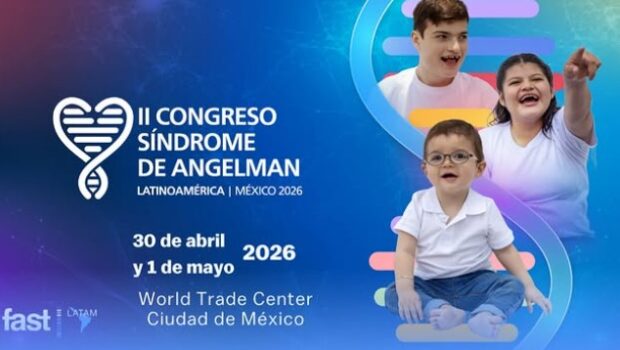
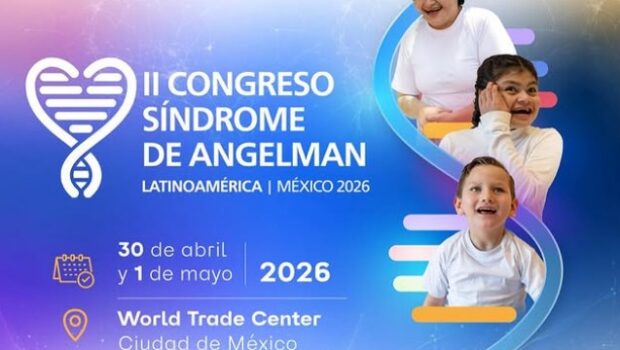
La comunidad se prepara para el II Congreso Latinoamericano de Síndrome de Angelman en Ciudad de México 30 de abril y 1 de mayo de 2026
Ya se encuentra disponible la web oficial del congreso, donde podrás acceder a inscripciones, novedades y toda la información actualizada: congresoangelman.com
Este encuentro será un espacio de intercambio y aprendizaje para conectar a familias, profesionales e investigadores de toda Latinoamérica, fortaleciendo redes y promoviendo avances en apoyo, intervención y calidad de vida.
February: Angelman Syndrome Awareness Month
As February begins—the month in which Angelman Syndrome Day is observed—we would like to share with the Spanish-speaking community some of the qualities that make children, adolescents, and young people with Angelman syndrome so special.
People with Angelman syndrome are often known for their joy, energy, and strong desire to connect with others, as well as for their unique way of being in the world: curious, affectionate, and deeply expressive. They often communicate through their body language, eye gaze, laughter, gestures, and vocalizations… which means they have so much to say.
We know that one of their greatest challenges is communication, which is why many people with Angelman syndrome benefit greatly from Augmentative and Alternative Communication (AAC) and, above all, from having supportive communication partners—people who create opportunities, model language, interpret with respect, and believe in their potential.
This month, we celebrate their ways of communicating, their presence, and their right to be heard.
Because communication is a right, not a privilege.
Families strongly believe that Augmentative and Alternative Communication (AAC) is not just a tool— it is a bridge to connection, autonomy, and inclusion.
In communication-accessible environments, we see how communication grows when there are real opportunities for interaction, consistent support, and a community that sustains and empowers.
For families, learning and supporting their loved ones along this journey is essential: every word, every symbol, and every attempt matters. But they also know this is not a path to walk alone—families need to learn, receive support, and be accompanied in order to implement AAC with confidence and meaning in everyday life.
The community is preparing for the 2nd Latin American Angelman Syndrome Congress, to be held in Mexico City on April 30 and May 1, 2026.
The official congress website is now available, where you can find registration, updates, and all the latest information: congresoangelman.com
This event will be a space for exchange and learning, bringing together families, professionals, and researchers from across Latin America—strengthening networks and promoting progress in support, intervention, and quality of life.

Filed under: Featured Posts
This post was written by Carole Zangari